
Now Reading: Sign Of The Times: A 1st Century Road Jesus Walked From Siloam to the Temple Rises From The Ashes
-
01
Sign Of The Times: A 1st Century Road Jesus Walked From Siloam to the Temple Rises From The Ashes

Sign Of The Times: A 1st Century Road Jesus Walked From Siloam to the Temple Rises From The Ashes

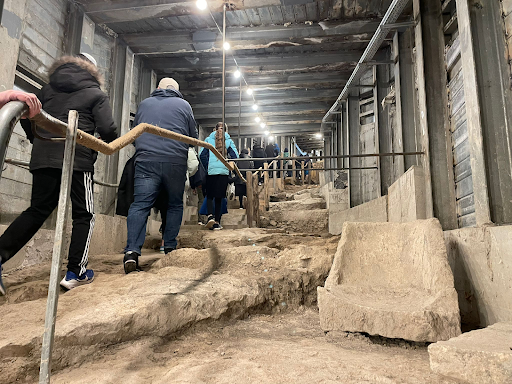
Archaeology beneath the Jerusalem confirms how Jewish worship shaped the city long before modern disputes.
Beneath the streets of modern Jerusalem, a 2,000-year-old stone road has been reopened, allowing visitors to step onto the same route that once carried Jewish pilgrims — and Jesus — from the Pool of Siloam up to the Temple Mount. Because later generations built directly over it, much of the road is now accessible through a carefully excavated tunnel system, preserving the city above while exposing the stones below. The reopening was reported by The Times of Israel.
This is not a reconstructed attraction or symbolic walkway. This is the actual road and the original paving stones leading to the Second Temple Jerusalem, laid in the early first century under Roman administration to support large volumes of Jewish pilgrimage traffic during Passover, Shavuot, and Sukkot. Wide limestone slabs, drainage channels, ritual baths, and commercial remains along the route confirm its function as a formal ascent road leading directly to the Temple, the religious and civic center of Jewish life.
Why We Can Be Sure Jesus Walked This Road
John’s Gospel record places Jesus squarely at the Pool of Siloam. Given Jerusalem’s geography and the structure of festival movement in the first century, the route from Siloam to the Temple was fixed. Pilgrims followed established streets designed for that purpose. When Jesus moved between these locations during feast days, He surely used this primary road.
For believers, this offers a rare point of contact between Scripture and modern Jerusalem. The settings described in the Gospels correspond to identifiable places along the road that still exist — not in theory, but in stone.
Why the Road Disappeared in the First Place
The road was buried during Jerusalem’s destruction in AD 70, when Roman forces leveled much of the city during the Jewish revolt. Buildings collapsed downslope, sealing streets beneath layers of stone, ash, and debris. The pilgrimage road was covered rather than dismantled, which is why it survived intact.
Jerusalem was rebuilt repeatedly in the centuries that followed. Byzantine, Islamic, Ottoman, and modern construction rose on top of the ruins, each era building on what remained beneath. Over time, the ancient street passed completely out of sight.
Why The Road’s Excavation Had to Be Underground
The road came to light in 2004 after a sewage pipe rupture exposed ancient stonework. By then, dense modern construction sat above it. Removing what had been built over the centuries would have meant dismantling parts of present-day Jerusalem.
Instead, Israeli archaeologists excavated horizontally along the road’s original line, reinforcing the structures above while clearing debris below. This tunneling approach made it possible to expose the street where it lay without damaging the city built on top of it.
The result is a walkable section of first-century Jerusalem that remains exactly where it was laid.
Jerusalem has been built, destroyed, and rebuilt more times than almost any city on earth. That process did not erase what came before — it buried it. What is being uncovered now was never lost, displaced, or replaced. It was simply covered by later centuries.
What Was Hidden for Centuries Is Being Revealed as Scripture’s Timeline Continues
The reopening of this road does more than reconnect the present to the past. It reminds us that Jerusalem’s story is not finished.
For nearly two thousand years, the Temple has been absent, its courts silent, its sacrifices halted. Yet the city continues to give up what was buried, layer by layer. Roads reappear. Foundations emerge. Structures once thought lost are shown to be waiting beneath the surface.
For those who take Scripture seriously, that pattern is not meaningless. The same Bible that places Jesus on this road also speaks plainly about a future restoration — not symbolic, not abstract, but physical and real. Just as the road was hidden and then revealed at the proper time, the Temple itself is not spoken of as a relic of the past, but as part of what is still ahead.
The uncovering of this road does not prove when the Temple will be restored. It does something more basic and more important: it reminds us that what God establishes in Jerusalem is not erased by time, conquest, or burial. It can be covered. It can be ignored. But it does not disappear.
The prophet Ezekiel was explicit about what lies ahead: “I will make a covenant of peace with them. It shall be an everlasting covenant with them. And I will set them in their land and multiply them, and will set my sanctuary in their midst forevermore.” (Ezekiel 37:26)
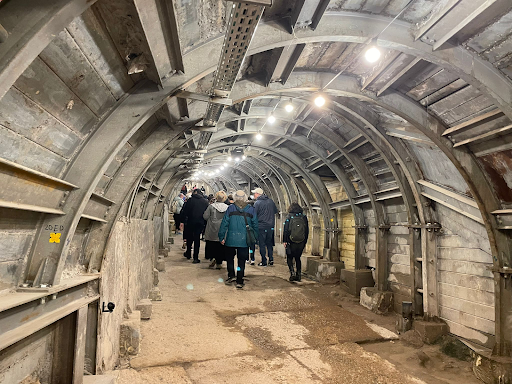
The 2,000-year-old Pilgrimage Road leading from the City of David to the Western Wall in Jerusalem opens to the public on January 20, 2026. (Rossella Tercatin/Times of Israel)

Amazon Best-Selling Author Pastor Greg Locke just launched his new book. Titled, The King Killers By PASTOR GREG LOCKE. When God places this prophetic sword in your hand, you will know—you were born to be a spiritual king killer. Grab your Book copy now on Amazon.com
Related Posts



Stay Informed With the Latest & Most Important News
Previous Post
Next Post


Advertisement